During the COVID-19 pandemic, states received extra funding for home and community-based services. This helped providers retain workers and allowed states to provide HCBS to more people. But with the additional funding ending, many people will lose access to HCBS and their independence.
What is HCBS?
According to CMS, “Home- and Community-Based Services (HCBS) are types of person-centered care delivered in the home and community. A variety of health and human services can be provided. HCBS programs address the needs of people with functional limitations who need assistance with everyday activities, like getting dressed or bathing. HCBS are often designed to enable people to stay in their homes, rather than moving to a facility for care.”
HCBS with Technology Supports
At GrandCare, we know the value of enabling people with disabilities to live independently. The GrandCare platform uses 17” touchscreens placed throughout the home. Residents rely on these touchscreens for medication reminders, to-do checklists, instructionals and one touch video calls with family and remote caregivers. GrandCare also uses activity monitoring sensors to alert the remote team if something needs attention. Wireless telehealth devices track vitals and can send notifications if they are outside designated thresholds. At GrandCare, we have personally witnessed how our technologies create better outcomes and happier residents, with far less strain on caregiving staff.
Who pays?
Fortunately, Congress has introduced a new bill, The Home and Community-Based Services (HCBS) Relief Act. The bill introduced by Senator Bob Casey (D-PA), Chairman of the U.S. Senate Special Committee on Aging, would increase much-needed funding for people with disabilities. If passed, it would provide dedicated Medicaid funds to states for two years to stabilize their HCBS service delivery networks, recruit and retain HCBS direct care workers, and meet the long-term service and support needs of people eligible for Medicaid home and community-based services.
Improve access to HCBS by increasing direct care worker pay and benefits
Decrease the number of people on waiting lists for HCBS
Pay for assistive technologies, staffing, and other costs that facilitate community integration
You can help!
The Arc of the United States, a non-profit that promotes and protects the human rights of people with intellectual and developmental disabilities, is asking for people to send a message to Congress and ask them to pass the HCBS Relief Act.
https://www.grandcare.com/wp-content/uploads/2023/11/home-community-based-services-relief-act.jpg8001200info@lmcllc.ushttps://www.grandcare.com/wp-content/uploads/2021/05/grandcare-logo-300x138.pnginfo@lmcllc.us2023-11-09 11:46:132023-11-09 11:53:10Congress Introduces Home and Community-Based Services (HCBS) Relief Act Bill
Touchscreen-based engagement and monitoring technology, GrandCare, enables communication between individuals and family members.
While we are no longer in the thick of the COVID-19 pandemic, it continues to threaten the safety of the aging and disability population. This is why it’s so important to keep these individuals connected to family, even when a physical visit isn’t possible.
We are always pleased to hear the personal stories of how GrandCare helps our customers. We recently heard from one daughter who, after being exposed to COVID, was unable to visit her mother at memory care.
“Almost done quarantining from COVID, and I wanted to thank you because having the ability to check on my mom daily with the GrandCare System has been priceless!” said Sharon Emerich, who uses GrandCare to check in with her mother and her caregiving team on a daily basis.
“She continues to be fine (thank goodness), but I was able to let her know why I haven’t been visiting and I was able to communicate quickly with caregivers also. Mom calls the GrandCare System a God-send and [my husband] Kirk and I agree!”
The GrandCare system, a 17-inch touchscreen, has family photos, streaming radio stations, old-time radio programs, games and medication reminders. Residents can check in on the system and video chat with designated family members. Optional motion and telehealth sensors can notify caregivers if something seems amiss.
We want to hear your story! If you’d like to share your GrandCare experience with us, please send us a message.
https://www.grandcare.com/wp-content/uploads/2023/10/Emmerich-testimonial.jpg8481820info@lmcllc.ushttps://www.grandcare.com/wp-content/uploads/2021/05/grandcare-logo-300x138.pnginfo@lmcllc.us2023-10-31 11:24:512023-11-01 11:02:39Mom Calls the GrandCare System “God-Send”
Join us for the first-ever Smart Home Expo on October 26, 2023, hosted by OPEN MINDS. As part of the OPEN MINDS Technology and Analytics Institute, this day-long event is dedicated to recent advancements in smart home technology that support independent and community-based living for persons with disabilities and older adults. The expo will feature innovative smart home technologies -both general and specialized–used today by health and human service agencies to support independence in community-based living.
Our own director of U.S. sales, Scott Feldstein, and our director of implementation & compliance, Hans Cabrera, will be presenting at 3:15pm ET. We will discuss issues in the disability/aging services and how technology like GrandCare can address those concerns. Issues like:
People with I/DD deserve as much independence as they can get, and receiving all the help they need through in-person support isn’t very independent.
States seemingly cannot fully fund the need for disability support services.
Even if the money was available, where would the workforce come from? There is a nationwide staff shortage crisis in every type of in-home care, including disability support.
About GrandCare
GrandCare Systems aims to reduce the staffing costs for disability and the aging population. Their touchscreen platform assists with cognitive needs, such as checklists, medication reminders, instructional videos, and more. The technology collects data through motion and telehealth sensors and alerts a remote support team. Learn more about how GrandCare Systems are reducing onsite caregiver hours, enabling independence, and cutting costs on staffing.
https://www.grandcare.com/wp-content/uploads/2023/10/grandcare-at-open-minds.png6961914info@lmcllc.ushttps://www.grandcare.com/wp-content/uploads/2021/05/grandcare-logo-300x138.pnginfo@lmcllc.us2023-10-18 12:20:222023-10-18 12:20:22GrandCare Presents at Smart Home Expo: Innovative Technologies For The Consumer in Philadelphia this October



Congress Introduces Home and Community-Based Services (HCBS) Relief Act Bill
During the COVID-19 pandemic, states received extra funding for home and community-based services. This helped providers retain workers and allowed states to provide HCBS to more people. But with the additional funding ending, many people will lose access to HCBS and their independence.
What is HCBS?
According to CMS, “Home- and Community-Based Services (HCBS) are types of person-centered care delivered in the home and community. A variety of health and human services can be provided. HCBS programs address the needs of people with functional limitations who need assistance with everyday activities, like getting dressed or bathing. HCBS are often designed to enable people to stay in their homes, rather than moving to a facility for care.”
HCBS with Technology Supports
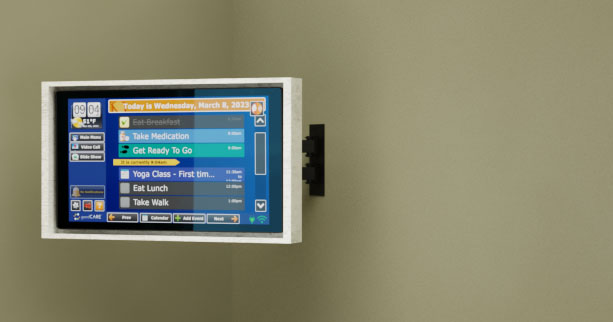
At GrandCare, we know the value of enabling people with disabilities to live independently. The GrandCare platform uses 17” touchscreens placed throughout the home. Residents rely on these touchscreens for medication reminders, to-do checklists, instructionals and one touch video calls with family and remote caregivers. GrandCare also uses activity monitoring sensors to alert the remote team if something needs attention. Wireless telehealth devices track vitals and can send notifications if they are outside designated thresholds. At GrandCare, we have personally witnessed how our technologies create better outcomes and happier residents, with far less strain on caregiving staff.
Who pays?
Fortunately, Congress has introduced a new bill, The Home and Community-Based Services (HCBS) Relief Act. The bill introduced by Senator Bob Casey (D-PA), Chairman of the U.S. Senate Special Committee on Aging, would increase much-needed funding for people with disabilities. If passed, it would provide dedicated Medicaid funds to states for two years to stabilize their HCBS service delivery networks, recruit and retain HCBS direct care workers, and meet the long-term service and support needs of people eligible for Medicaid home and community-based services.
You can help!
The Arc of the United States, a non-profit that promotes and protects the human rights of people with intellectual and developmental disabilities, is asking for people to send a message to Congress and ask them to pass the HCBS Relief Act.
Read more about the HCBS Relief Act of 2023 released by Senator Casey.
Mom Calls the GrandCare System “God-Send”
Touchscreen-based engagement and monitoring technology, GrandCare, enables communication between individuals and family members.
While we are no longer in the thick of the COVID-19 pandemic, it continues to threaten the safety of the aging and disability population. This is why it’s so important to keep these individuals connected to family, even when a physical visit isn’t possible.
We are always pleased to hear the personal stories of how GrandCare helps our customers. We recently heard from one daughter who, after being exposed to COVID, was unable to visit her mother at memory care.
“Almost done quarantining from COVID, and I wanted to thank you because having the ability to check on my mom daily with the GrandCare System has been priceless!” said Sharon Emerich, who uses GrandCare to check in with her mother and her caregiving team on a daily basis.
“She continues to be fine (thank goodness), but I was able to let her know why I haven’t been visiting and I was able to communicate quickly with caregivers also. Mom calls the GrandCare System a God-send and [my husband] Kirk and I agree!”
The GrandCare system, a 17-inch touchscreen, has family photos, streaming radio stations, old-time radio programs, games and medication reminders. Residents can check in on the system and video chat with designated family members. Optional motion and telehealth sensors can notify caregivers if something seems amiss.
We want to hear your story! If you’d like to share your GrandCare experience with us, please send us a message.
GrandCare Presents at Smart Home Expo: Innovative Technologies For The Consumer in Philadelphia this October
Join us for the first-ever Smart Home Expo on October 26, 2023, hosted by OPEN MINDS. As part of the OPEN MINDS Technology and Analytics Institute, this day-long event is dedicated to recent advancements in smart home technology that support independent and community-based living for persons with disabilities and older adults. The expo will feature innovative smart home technologies -both general and specialized–used today by health and human service agencies to support independence in community-based living.
Our own director of U.S. sales, Scott Feldstein, and our director of implementation & compliance, Hans Cabrera, will be presenting at 3:15pm ET. We will discuss issues in the disability/aging services and how technology like GrandCare can address those concerns. Issues like:
About GrandCare
GrandCare Systems aims to reduce the staffing costs for disability and the aging population. Their touchscreen platform assists with cognitive needs, such as checklists, medication reminders, instructional videos, and more. The technology collects data through motion and telehealth sensors and alerts a remote support team. Learn more about how GrandCare Systems are reducing onsite caregiver hours, enabling independence, and cutting costs on staffing.
More info at OPEN MINDS.