Supported Life 2026: Strengthening Supports in an Evolving Environment
The 40th Annual Supported Life Conference is returning this fall, bringing together self-advocates, family members, service providers, and professionals to explore inclusive solutions and innovations in the developmental disabilities field. Hosted by the Supported Life Institute, this landmark 40th-anniversary event takes place on October 8–9, 2026, at the Wyndham Sacramento Hotel in Sacramento, California.
This year’s theme, “Strengthening Supports in an Evolving Environment,” focuses on practical strategies, community integration, and technology-driven solutions that empower individuals with intellectual and developmental disabilities (IDD) to live fully in their communities.
Visit GrandCare Systems in the Exhibit Hall
Be sure to stop by the GrandCare Systems booth in the Exhibit Hall!
Whether you’re looking to enhance independent living or streamline care management, GrandCare Systems provides powerful, user-friendly technology designed specifically to support individuals and care teams. Drop by to see live demos, ask questions, and discover how Remote Supports can transform your person-centered care.
GrandCare Systems is a comprehensive Remote Supports, telehealth, and assistive technology platform. It is designed to empower individuals living with intellectual or developmental disabilities (I/DD) to live independently while keeping care teams and family members connected.
The system blends an intuitive, user-facing touchscreen with smart home sensors and telehealth devices to provide proactive, compassionate support.
Features of the GrandCare Touchscreen
The interactive touchscreen serves as the primary hub inside the user’s residence, offering ADL prompts, socialization, with simple navigation:
ADL Reminders: Delivers visual and auditory prompts for Activities of Daily Living (ADLs), such as taking medication, keeping calendar appointments, performing household tasks, and routine daily check-ins.
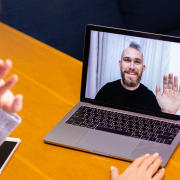
HIPAA-Compliant Video Calling: Allows direct, one-touch video chats with family members, remote support staff, and healthcare providers.
Social Engagement: Features entertainment options such as brain games, trivia, jokes, classic audiobooks, live streaming radio, news, weather, and photo sharing.
Customizable Interface: Designed for individuals with little to no prior technology experience. The screen can be tailored to the individual’s preferences, displaying only the modules they need.
Interactive Surveys: Enables care teams to push daily check-in questions or surveys directly to the screen to monitor mood, wellness, or daily preferences.
Caregiving & Remote Monitoring Tools

GrandCare provides care teams, agencies, and families with a suite of background monitoring and administrative tools:
Wireless Activity & Motion Sensors: Sensors monitor home activity (e.g., movement in the kitchen, bathroom, or getting out of bed) and door openings.
Telehealth & Health Device Integration: Syncs with Bluetooth health monitors such as blood pressure cuffs, glucometers, pulse oximeters, and weight scales.
Customizable Rules & Automated Alerts: Caregivers can establish “if-then” logic rules. For example, “IF motion is not detected in the kitchen by 10:00 AM, THEN send a text alert to the care team” or “IF blood pressure exceeds 130/80, THEN alert the clinical staff.”
Caregiver Portal: Provides a central dashboard for care providers to revi
ew activity logs, vitals, schedule reminders, send photos, or initiate video calls.
Why Choose to Implement Remote Supports?

Staff Efficiency
Remote Supports allow staff to oversee multiple individuals remotely rather than providing continuous on-site monitoring. Direct staff interventions can be reserved for times when assistance is genuinely needed.
In provider case studies, GrandCare helped increase caregiver-to-individual support ratios significantly—in one Ohio study, expanding ratios from 1:6 up to 1:21.
Real-time alert notifications allow support personnel to address potential issues before they lead to emergency room visits or hospitalizations.
Independence for Individuals with Disabilities: Moving from Monitoring to Coaching
Individuals gain confidence managing their daily routines, such as medication and household chores, using touchscreen prompts rather than relying on constant, in-person staff supervision. Remote Supports enables individuals to control their environment, engage with family and friends independently, and easily reach out for support whenever they choose.
Cost Savings
Remote Supports decrease the need for overnight or round-the-clock in-person staff, significantly reducing operational expenses and labor costs for residential care organizations.
Don’t Miss These Key Sessions at the Supported Life 2026 Conference
With a lineup of insightful workshops across both days, make sure to add these two sessions to your schedule.
Session 1B: Beyond Crisis Monitoring: Remote Supports for Independent Living
Thursday, October 8 | 10:20 AM – 11:25 AM
Robert Torgusen (AngelSense); Laura Mitchell (GrandCare Systems)
Many clients want greater independence, connection and privacy without constant in-person supervision. Agencies continue to navigate workforce shortages and have more referrals than they can serve. This session will explore how a hybrid model of direct care paired with person-centered technologies can empower agencies to serve more clients, while individuals can build skills and live more independently without sacrificing safety.
Attendees will learn how proactive technologies, discrete sensors, and wearables can shift support models from constant oversight to meaningful coaching and responsive care only when support is truly needed. And the best part: more clients can be served while everyone saves money!
Session 6A: People First, Technology Forward: Innovation Supports for Staffing Crises
Friday, October 9 | 3:05 PM – 4:15 PM
Laura Mitchell (GrandCare Systems); John Decker (Alta California Region Center); Don Shirley (SafeinHome); Krystall Rollins and Julian Elliott (California Department of Developmental Services)
Across California and throughout the country, I/DD provider organizations are facing unprecedented staffing shortages while individuals are still not receiving all of the services they need. DSPs carry enormous responsibility, increasing caseloads, and often lack the tools and resources needed to provide proactive, person-centered support.
This session will describe how innovative activity and health monitoring technologies power remote supports to address staffing needs, while simultaneously improving client independence. This 24/7 real-time support and care coordination are positively transforming support models without sacrificing safety. Attendees will hear practical strategies, real-world implementation examples and reimbursement opportunities in California.
We look forward to connecting with you in Sacramento this October!


 The GrandCare touchscreen is a device that can be placed on a flat surface or mounted to the wall in any room. The touchscreen provides ADL reminders, calendars, and two-way HIPAA-compliant communication. Each device is customizable to the individual, not just with their daily tasks or appointments, but also to their interests with photos and videos of the things they love most.